beginnerFree
Abstract Classes
Partial blueprint - some methods, some holes
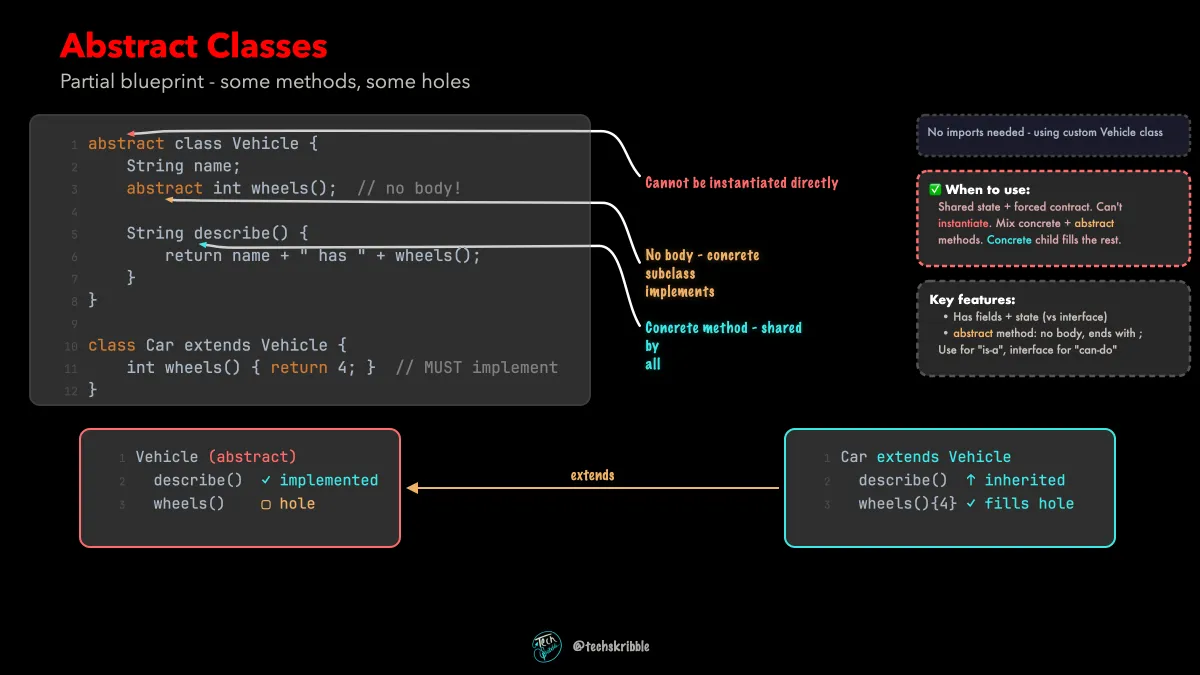
Abstract classes define a contract with some implementation. Subclasses fill in the rest.
Watch
The narrated version of this skribble — tap play for the full-size video.
0:00 / 2:20
Deep dive
The Big Picture
Abstract classes sit between interfaces and concrete classes. They can mix implemented and abstract methods, but can't be instantiated directly.
- Use when subclasses share common code
- Template Method pattern: skeleton with overridable steps
- Examples:
AbstractList,HttpServlet,InputStream
How It Works
Compiler blocks new on abstract classes. Subclasses must implement all abstract methods or be abstract themselves.
- Abstract methods have no body (just signature)
- Concrete methods work like regular class methods
- Can have fields, constructors,
staticmethods - Constructors run normally for inheritance chain
In the Java Landscape
Abstract classes bridge interfaces and full inheritance.
- Java 8+
defaultmethods blur the line with interfaces - Single inheritance limit applies (one superclass)
- Often combined with interfaces for flexibility
- Common in collection and UI frameworks
- Sealed abstract classes (Java 17+) restrict hierarchy
Pitfalls and Best Practices
- Prefer interfaces + composition over abstract classes
- Use abstract classes when you need state or constructors
- Don't make everything
protected- be selective - Document the subclass contract clearly
- Keep small to avoid fragile base class problem