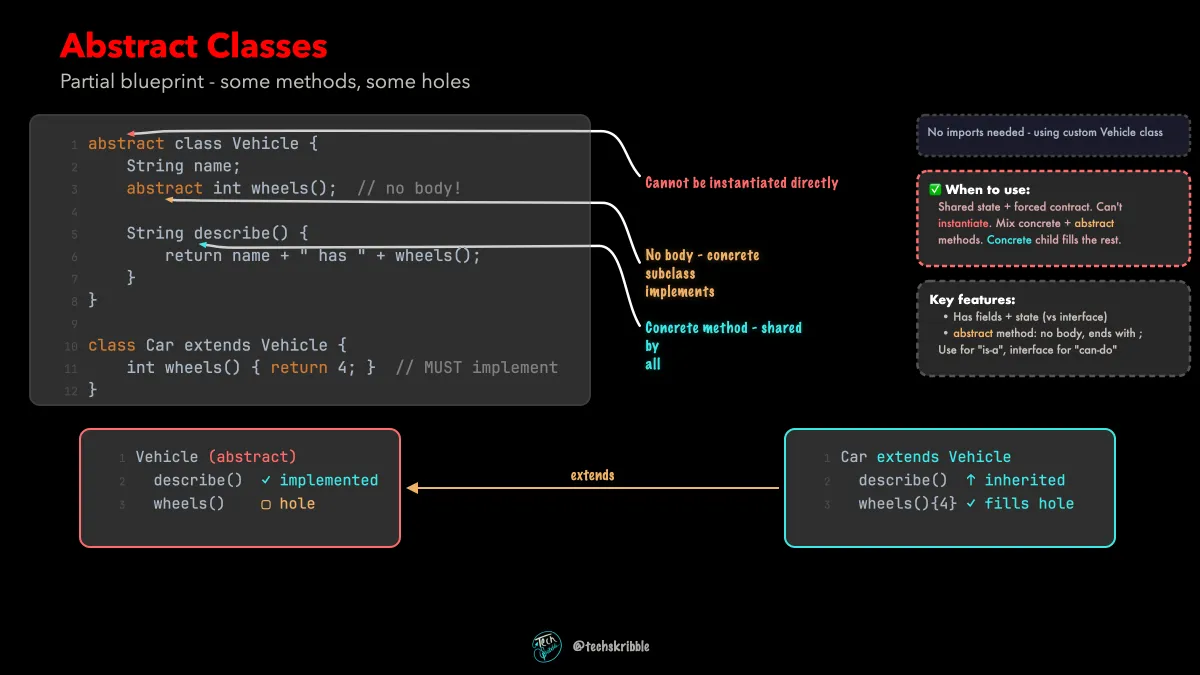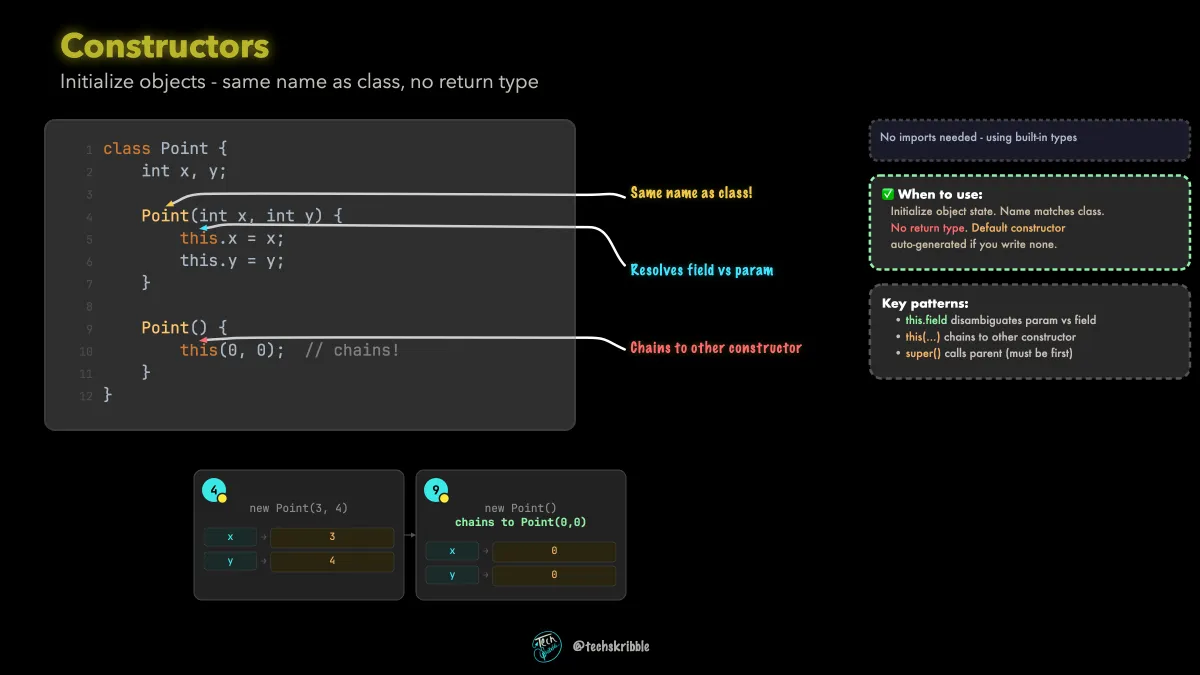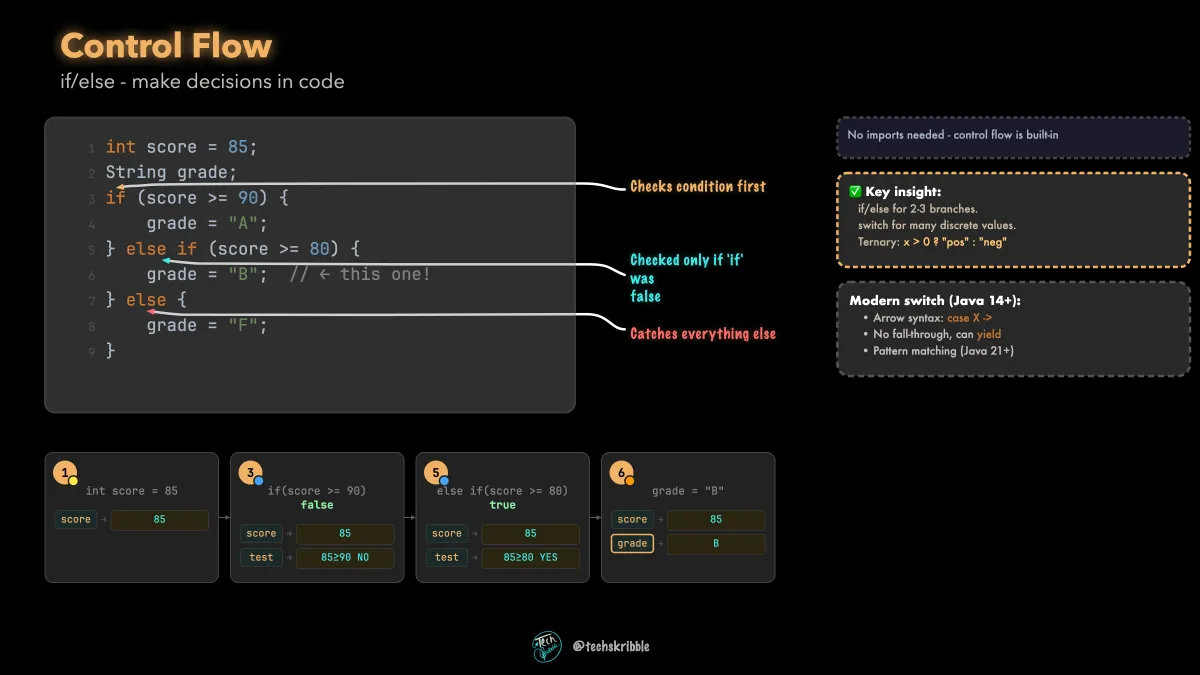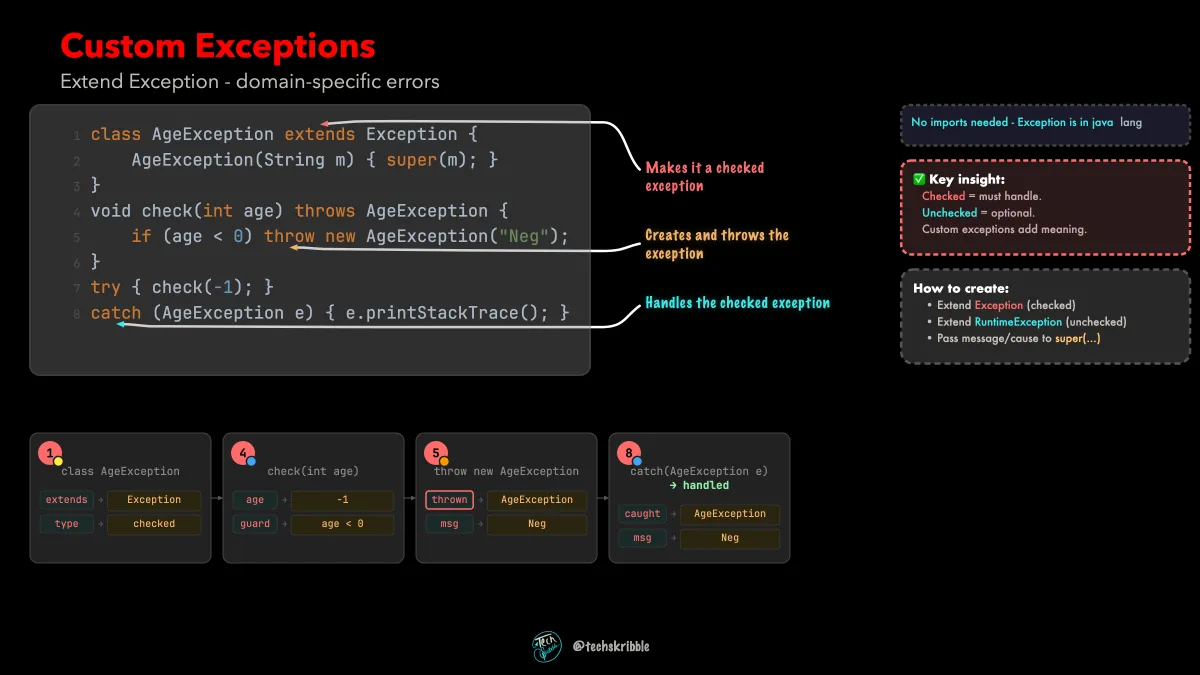
beginnerFree
Classes & Objects
Blueprints and instances - the core of Java
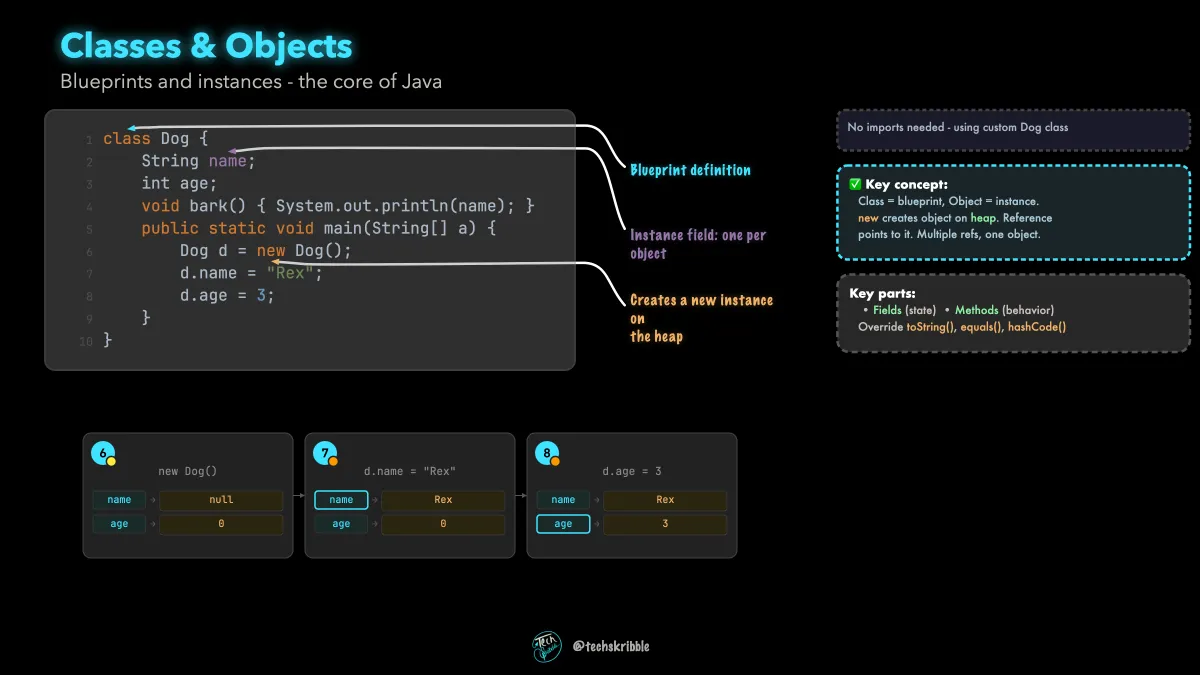
A class is a blueprint. An object is an instance created from that blueprint.
Watch
The narrated version of this skribble — tap play for the full-size video.
0:00 / 2:22
Deep dive
The Big Picture
Classes are blueprints for creating objects. They define structure (fields) and behavior (methods) that instances share.
- Every Java program needs at least one
class - Objects are runtime instances with their own state
- Everywhere:
String,ArrayList,Scanner
Classes organize code into reusable, testable units.
How It Works
The JVM allocates heap memory when you call new. Each object stores field values on the heap. Methods live in the method area, shared by all instances of that class.
- Constructor runs after memory allocation
- Garbage collector reclaims unreferenced objects
thisrefers to the current instance
In the Java Landscape
Classes are the foundation of Java's object-oriented design.
- Records (Java 16+): compact data carriers, final components
- Sealed classes (Java 17+) restrict subclassing
- Inner/nested classes encapsulate helper logic
- Lambdas can replace anonymous classes (functional interfaces)
- Enums are special classes with fixed instances
Pitfalls and Best Practices
- Override
equals()andhashCode()together or neither - Make fields
private, expose via methods - Avoid God classes - keep responsibilities focused
- Prefer composition over inheritance
- Use constructors for mandatory fields