beginnerFree
Methods
Reusable blocks of code with inputs and outputs
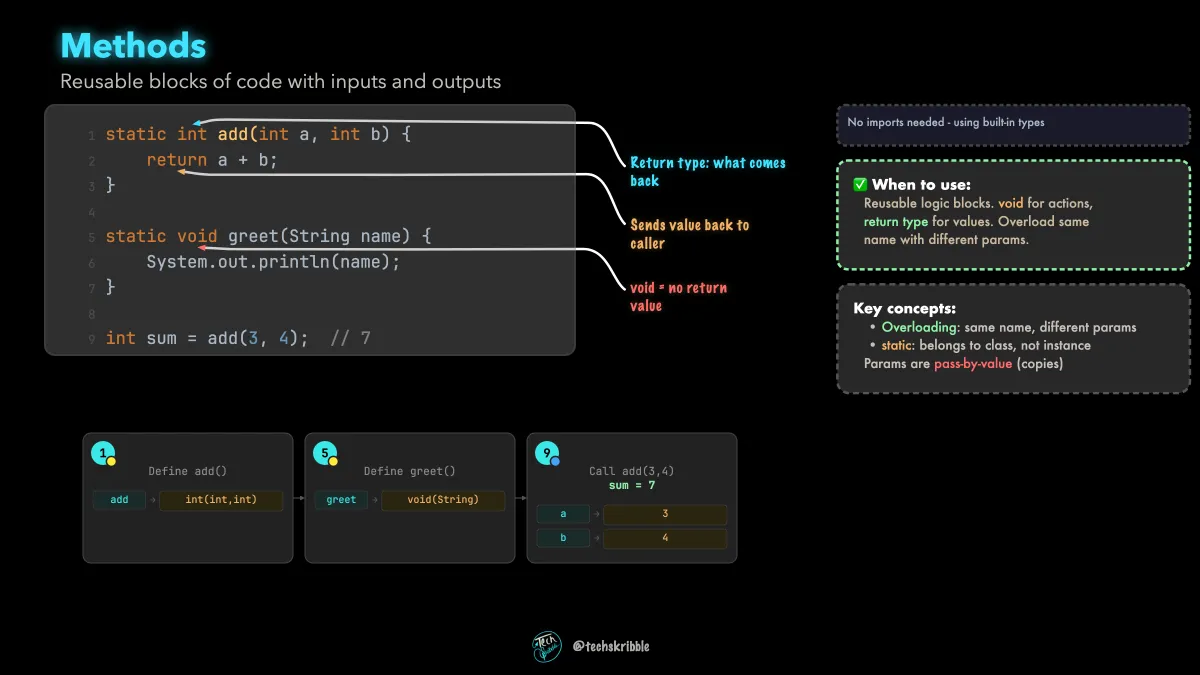
Methods let you organize code into named, reusable pieces.
Watch
The narrated version of this skribble — tap play for the full-size video.
0:00 / 2:21
Deep dive
The Big Picture
Methods are named blocks of code that perform actions. They accept parameters, do work, and optionally return a value.
- Organize code into reusable, testable pieces
- Signature: name + parameter types (not return type)
voidmethods return nothing; others mustreturna value
Good methods do one thing well and have descriptive names.
How It Works
Method calls use the call stack. Each call creates a frame holding local variables and return address.
- Java passes primitives by value (copy)
- Java passes object references by value (ref is copied)
staticmethods belong to the class, not an instance- Overloading: same name, different parameter types/count
In the Java Landscape
Methods are how Java implements behavior in OOP.
- Java 8 added default methods in interfaces
- Varargs (Java 5+):
void log(String... msgs) - Records auto-generate accessor methods (Java 16+)
- Method references:
String::length(Java 8+) finalmethods can't be overridden by subclasses
Pitfalls and Best Practices
- Keep methods short - 20 lines max is a good target
- One responsibility per method (Single Responsibility)
- Use
@Overridewhen overriding to catch typos - Avoid side effects - prefer returning results
- Validate parameters at method entry (fail fast)
- Name with verbs:
calculateTotal(),findUser()