beginnerFree
Polymorphism
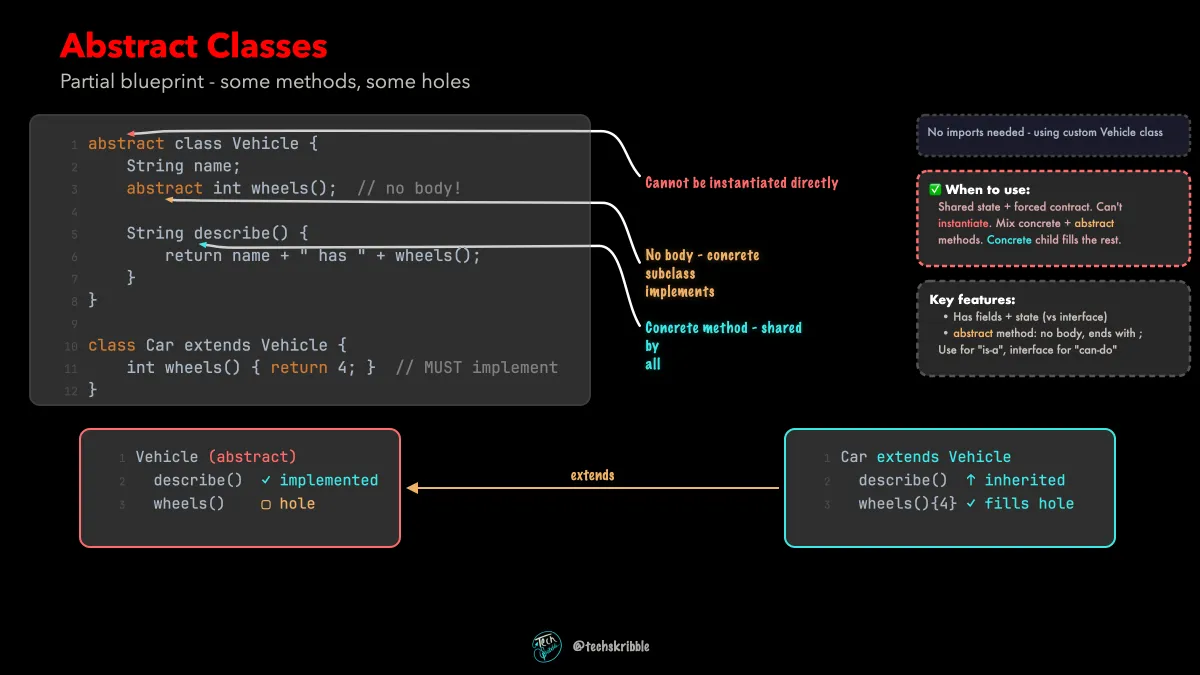
One supertype, many implementations
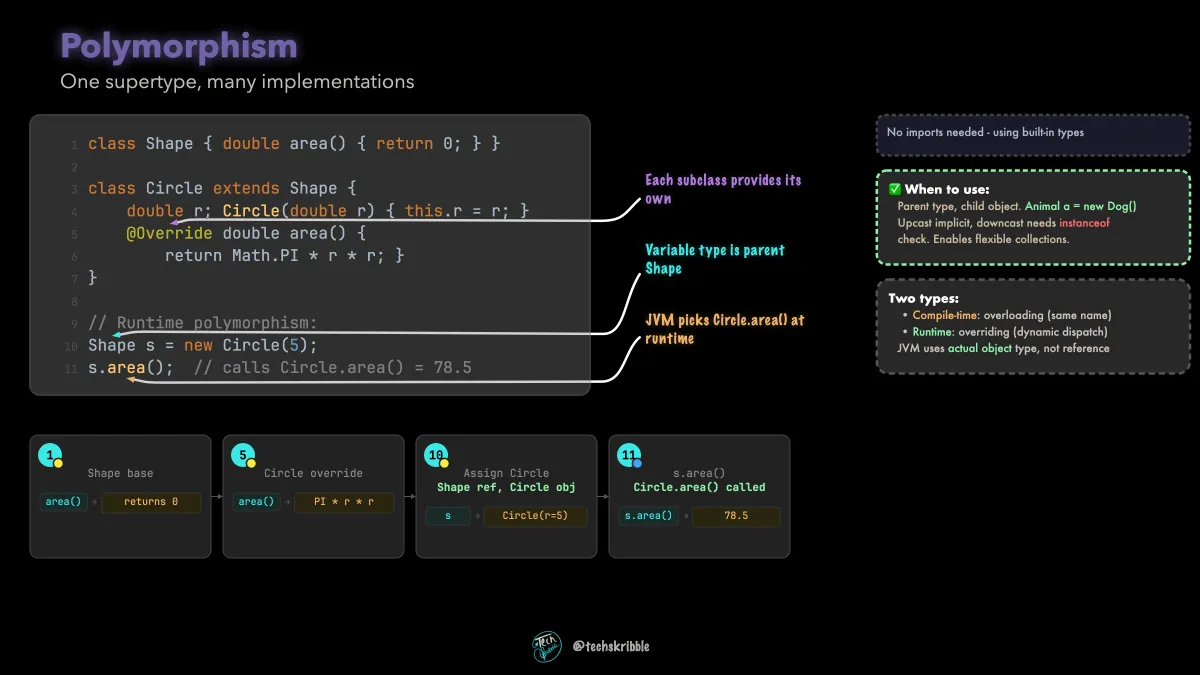
Polymorphism lets you treat different objects uniformly through a shared type.
Watch
The narrated version of this skribble — tap play for the full-size video.
0:00 / 1:16
Deep dive
The Big Picture
Polymorphism means "many forms" - one reference type can hold objects of different types. JVM picks the right method at runtime.
- Compile-time type can differ from runtime type
- Powers generic code:
Collections.sort(List<T>) - Enables frameworks to call your overridden methods
The payoff for inheritance and interfaces.
How It Works
Java dispatches virtual calls on the object's runtime class, not the reference type (typically via a per-class method table).
- Dynamic dispatch is cheap, near-constant overhead
- JIT compiler inlines small methods for speed
final/static/private calls can be bound statically- Overloading: compile-time; overriding: runtime
In the Java Landscape
Polymorphism supports SOLID's Open/Closed Principle.
- Overloading: same name, different params (compile-time)
- Overriding: subclass replaces method (runtime)
- Covariant returns (Java 5+) refine return types
- Pattern matching (Java 16+) simplifies type checks
- Visitor pattern leverages double dispatch
Pitfalls and Best Practices
- Cast safely with
instanceofbefore downcasting - Overloaded methods can confuse:
remove(int)vsremove(Object) - Use
@Overrideto catch signature typos - Can't override
private,static, orfinalmethods - Prefer interfaces for polymorphism over class hierarchies