beginnerFree
Interfaces
Contract - what a class must do, not how
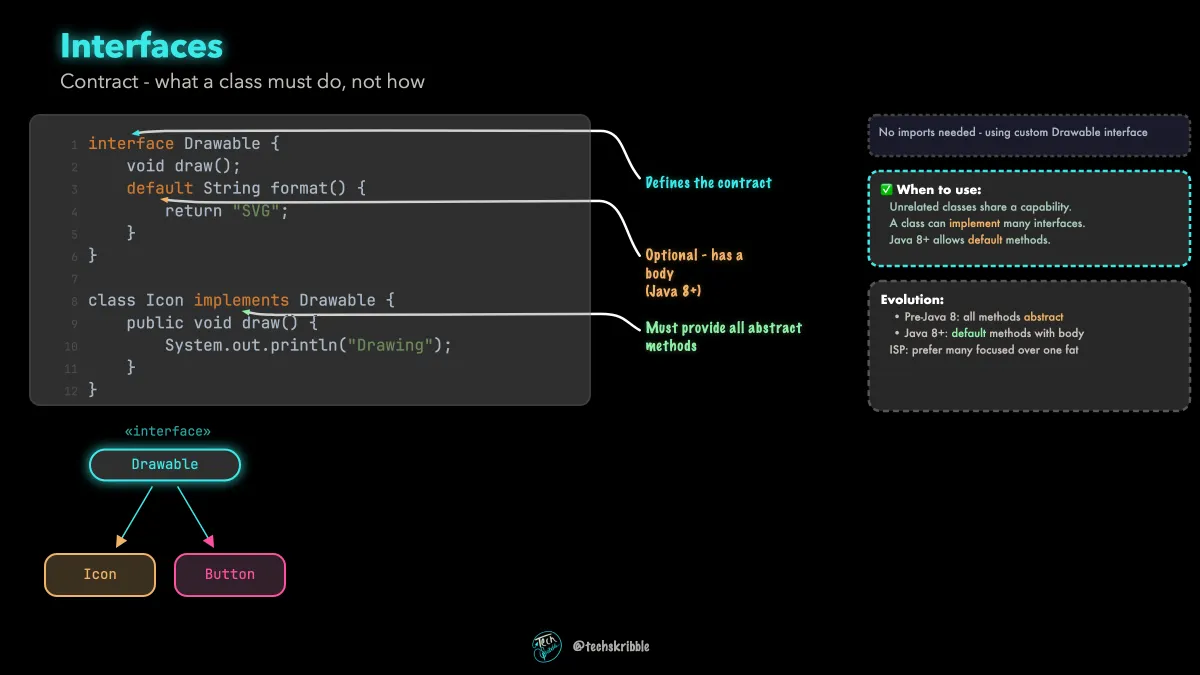
Interfaces define behavior contracts. A class can implement multiple interfaces.
Watch
The narrated version of this skribble — tap play for the full-size video.
0:00 / 1:23
Deep dive
The Big Picture
Interfaces define contracts - method signatures that classes must implement. They enable polymorphism without inheritance.
- Classes can implement multiple interfaces
- Essential:
List,Comparable,Runnable - Allow unrelated classes to share behavior
Central to "program to an interface" design principle.
How It Works
Abstract interface methods have no body; default, static, and private methods can have bodies. JVM uses itables to dispatch.
- Abstract methods implicitly
public abstract - Fields are
public static finalconstants - Java 8+ allows
defaultandstaticmethods - Java 9+ allows
privatehelper methods
In the Java Landscape
Interfaces are central to Java's design philosophy.
- Collections, streams, concurrency APIs use them heavily
- Functional interfaces enable lambdas (Java 8+)
- Marker interfaces (
Serializable) tag classes - Sealed interfaces (Java 17+) restrict implementations
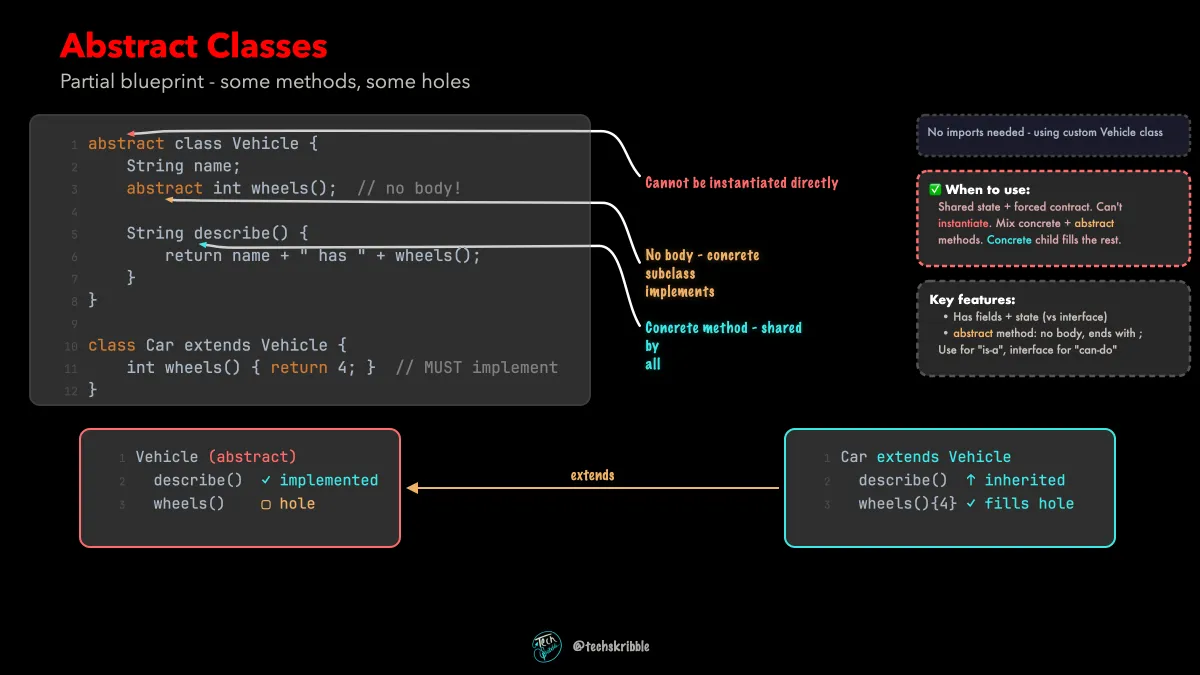
defaultmethods blur the line with abstract classes
Pitfalls and Best Practices
- Keep interfaces small and focused (ISP)
- Program to interfaces, not implementations
- Use
defaultmethods to evolve APIs without breaking clients - Don't use interfaces as constant holders
- Prefer single-method interfaces for functional use