intermediateFree
HashMap Internals
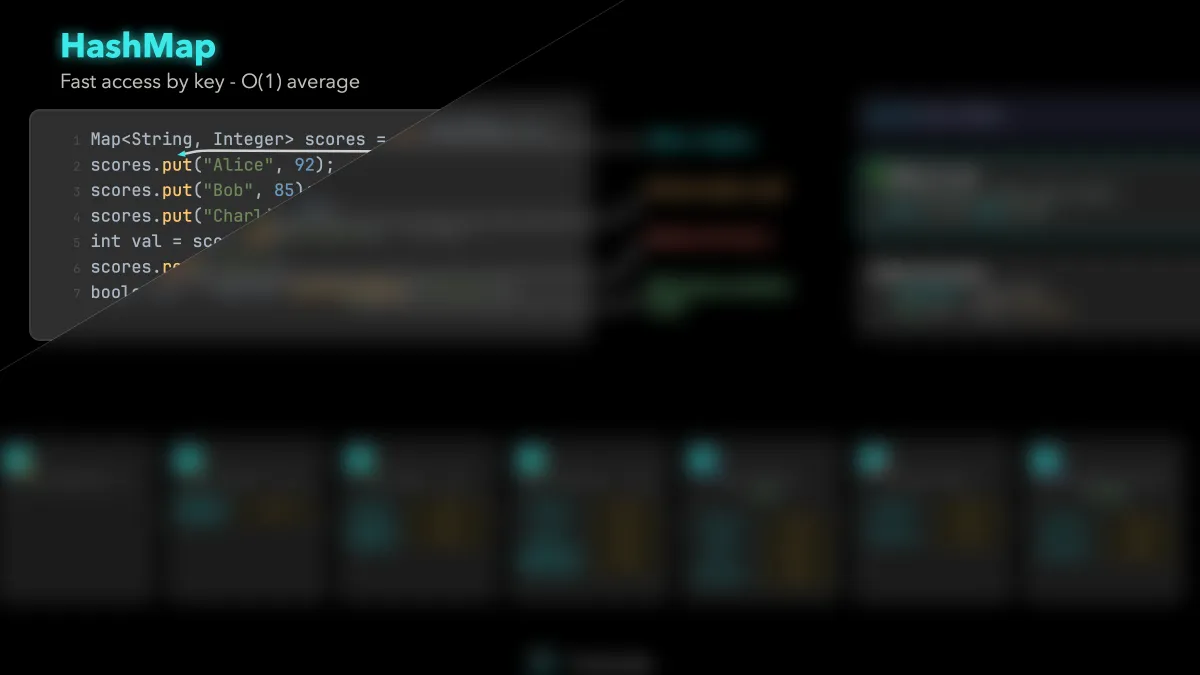
Inside put & get - hashing, buckets, collisions
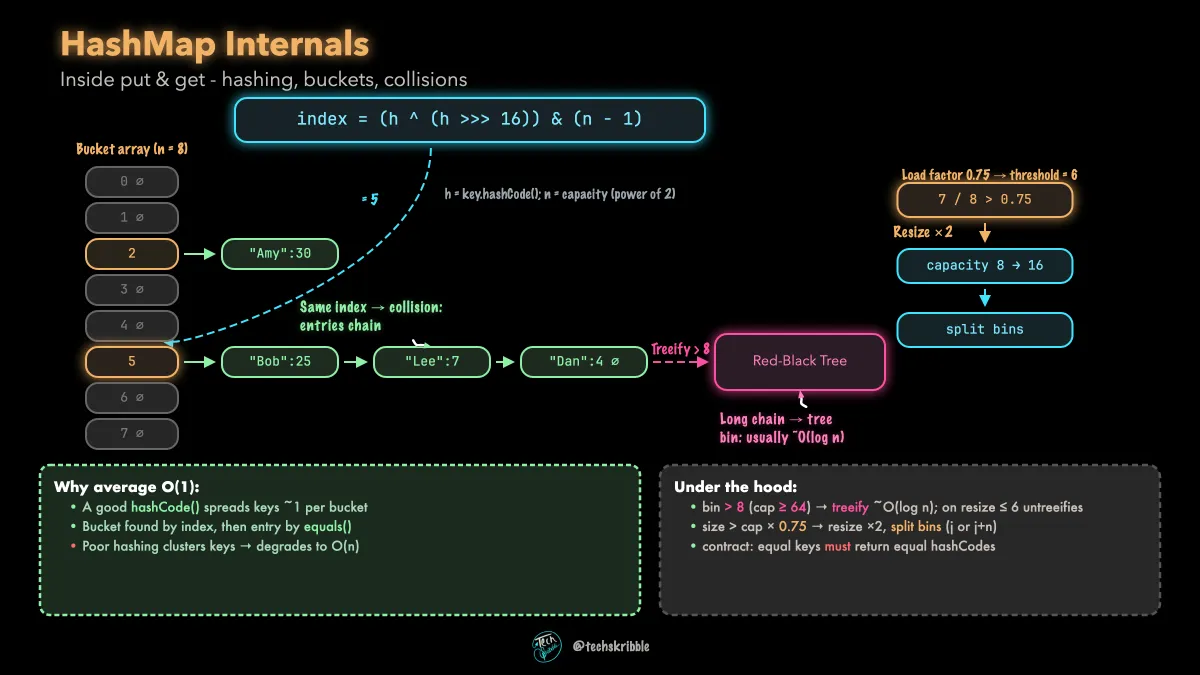
A key's hash picks a bucket; collisions chain, then treeify past 8.
Watch
The narrated version of this skribble — tap play for the full-size video.
0:00 / 2:14
Deep dive
The Big Picture
HashMap is a hash table - array of buckets with chaining.
- Fast O(1) lookups by computing index from key hash
- Handles collisions with linked lists (or trees)
- Grows automatically when load factor exceeded
- Understanding internals helps debug performance
Key to many algorithms: caches, indexes, deduplication.
How It Works
1. Call key.hashCode(), then spread: h ^ (h >>> 16) 2. Index: spread & (capacity - 1) 3. Check bucket, use equals() to find key 4. Collision? Chain entries in linked list 5. Chain > 8 AND table ≥ 64: treeify to red-black (else resize) 6. Rehash when size > capacity * 0.75
In the Java Landscape
Internals evolved over Java versions:
- Java 7: linked list chaining only
- Java 8+: tree bins for long chains (better worst-case)
- Default capacity:
16, load factor:0.75 ConcurrentHashMapuses CAS for concurrency (Java 8+)- Understanding helps choose initial capacity
Pitfalls and Best Practices
- Bad
hashCode()causes collisions - degrades to O(n) - Override
hashCode()andequals()together always - Immutable keys prevent broken lookups
- Pre-size:
new HashMap<>((int)(expected / 0.75f) + 1) - Don't rely on iteration order - use
LinkedHashMap