beginnerFree
Map
Key-value pairs for fast lookups
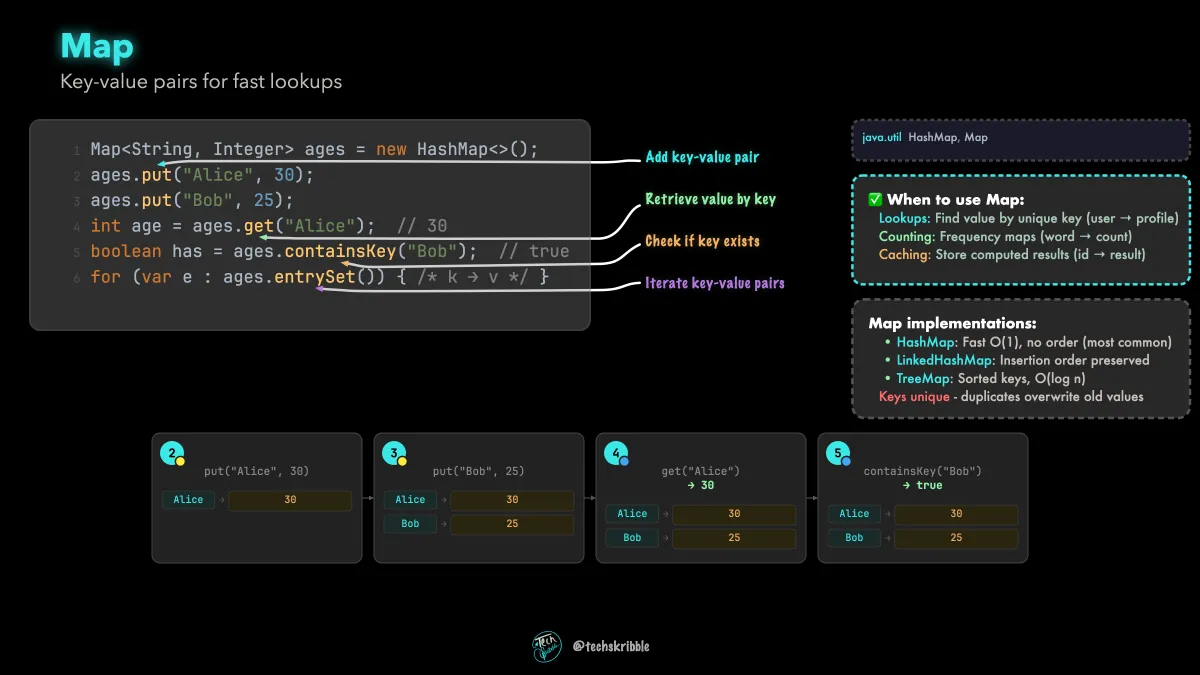
Maps store associations between unique keys and values, enabling fast key-based lookups (HashMap averages O(1)).
Watch
The narrated version of this skribble — tap play for the full-size video.
0:00 / 1:24
Deep dive
The Big Picture
The Map interface maps keys to values.
- Implementations:
HashMap,TreeMap,LinkedHashMap - Essential for data relationships and lookups
- JSON objects naturally map to
Map<String, Object> - HTTP headers, configs stored as maps
Core to Java programming - used everywhere.
How It Works
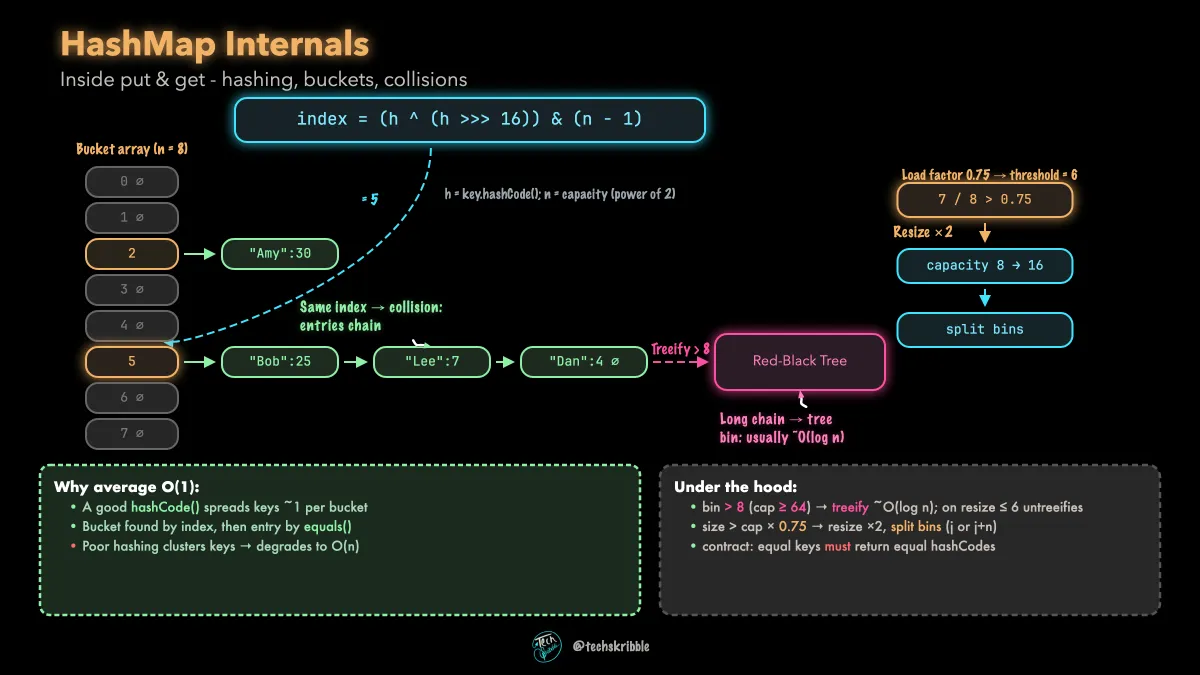
Maps keys to values using hashing or tree structures.
put(key, value)adds or updates entryget(key)retrieves value ornull- Iterate:
entrySet(),keySet(),values() - Java 8+:
computeIfAbsent(),merge() - Immutable:
Map.of()(Java 9+)
In the Java Landscape
Core to Java - HTTP params, configs, caches all use maps.
- Spring
@RequestParamconverts toMap - Properties files are key-value maps
EnumMapandIdentityHashMapfor special cases- Collectors:
groupingBy()produces maps from streams Map.entry()(Java 9+) for creating entries
Pitfalls and Best Practices
- Use
getOrDefault()for a fallback when a key is absent - Hash-map keys: consistent
hashCode()/equals();TreeMapneeds stable ordering - Avoid mutable keys
- Use
computeIfAbsent()for lazy initialization - Return
Map.of()for immutable results