beginnerFree
Inheritance
extends - child class inherits from parent
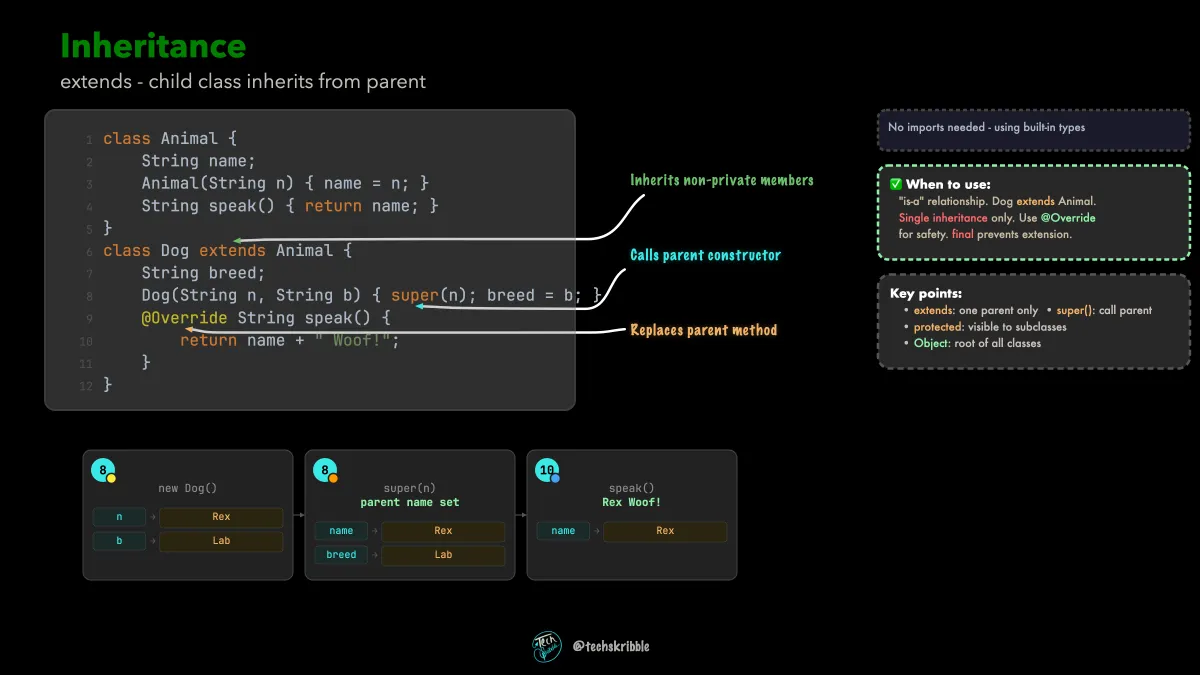
Inheritance lets you reuse code. A subclass inherits non-private parent members and can override methods.
Watch
The narrated version of this skribble — tap play for the full-size video.
0:00 / 1:20
Deep dive
The Big Picture
Inheritance lets a class acquire fields and methods from another using extends. It models "is-a" relationships.
- Subclass inherits all non-private members
- Common:
HttpServlet,JPanel,Exception - Java allows single inheritance only (one superclass)
Enables code reuse and polymorphic behavior.
How It Works
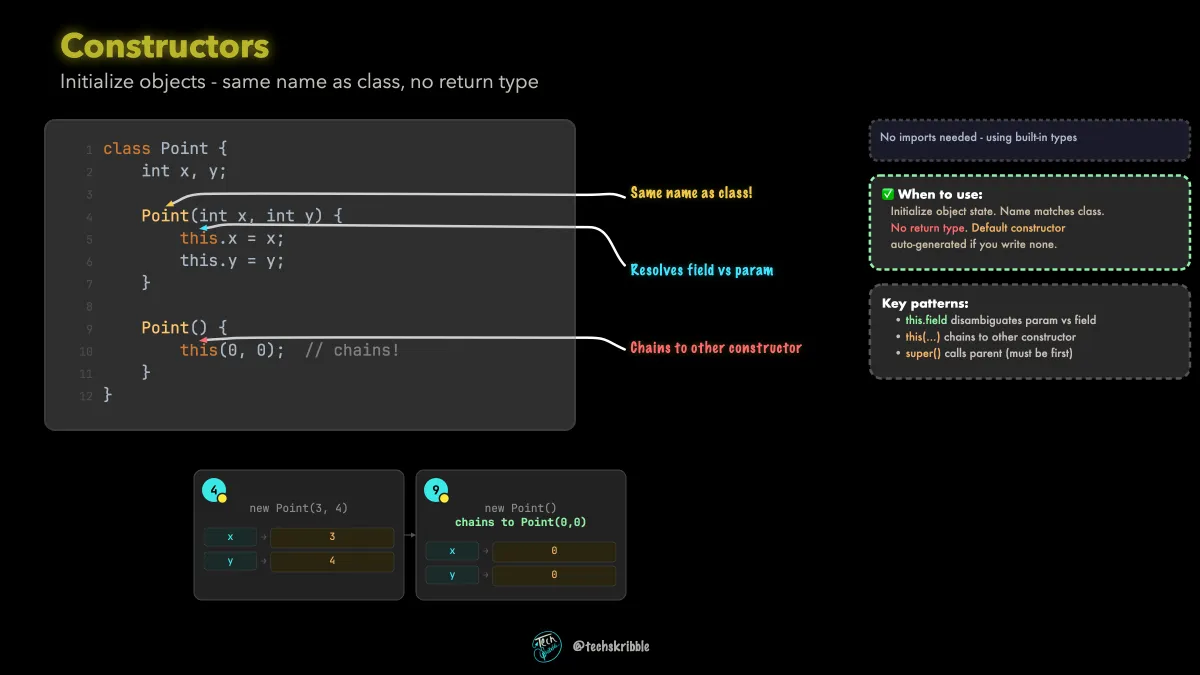
Creating a subclass instance runs superclass constructor first (via super()), then subclass constructor.
@Overridereplaces inherited method behaviorsuper.method()calls parent version- Method calls check runtime type (dynamic dispatch)
- Fields are not polymorphic - resolved at compile time
In the Java Landscape
One of the four OOP pillars, closely tied to polymorphism.
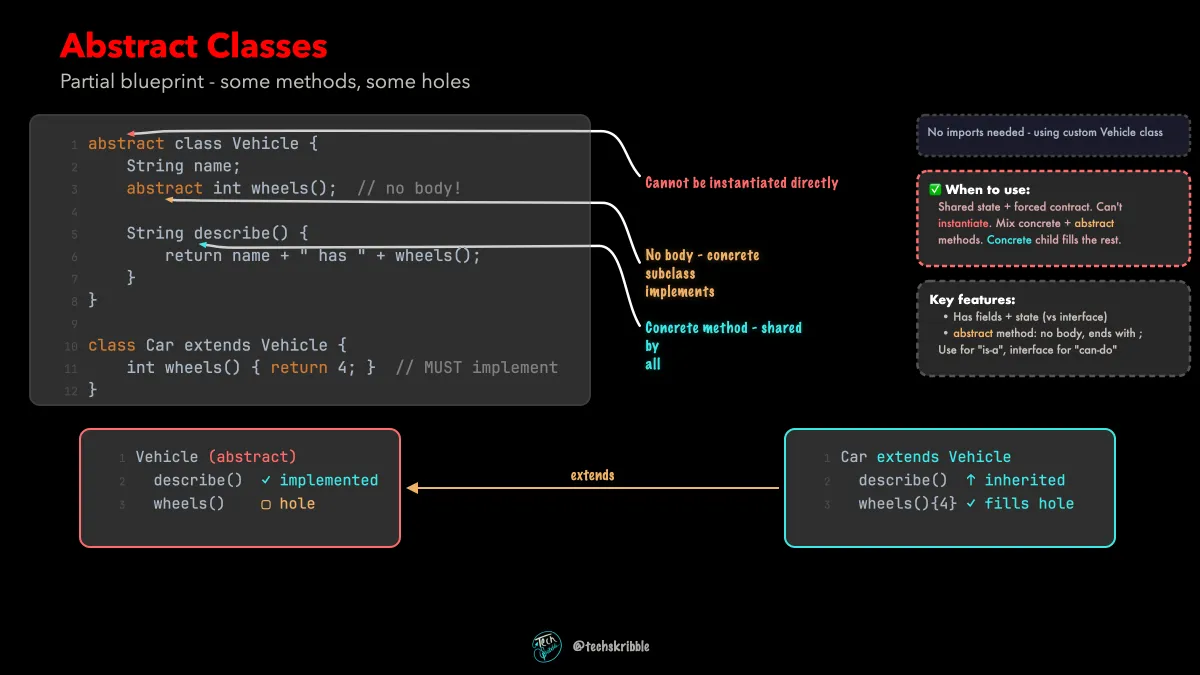
- Abstract classes provide partial implementations
finalclasses (String,Integer) block inheritance- Sealed classes (Java 17+) permit specific subclasses
- Modern Java favors composition and interfaces
- Interfaces provide multiple-inheritance of behavior
Pitfalls and Best Practices
- Don't inherit just to reuse code - use composition
- Liskov: subclass must work wherever parent does
- Mark methods
finalif subclasses shouldn't override - Avoid deep hierarchies (>3 levels gets brittle)
- Document
protectedmethods - they're part of your API